

My Approach to Assemblage Art
When I step into my studio, I don’t arrive with a plan. I begin instead by looking around—at the piles of paper, wood, metal, paint, or ink that I’ve set in order the night before. Clearing my work surface at the end of each day is a ritual: it ensures that yesterday’s fragments don’t dictate what comes next. Each morning, the space feels new again. Sometimes I stand there quietly until something—an odd scrap, a gear, a worn edge of wood—catches my attention. That moment of recognition is enough to set me in motion, and usually my hands start working before I’ve had time to think through what I’m doing.
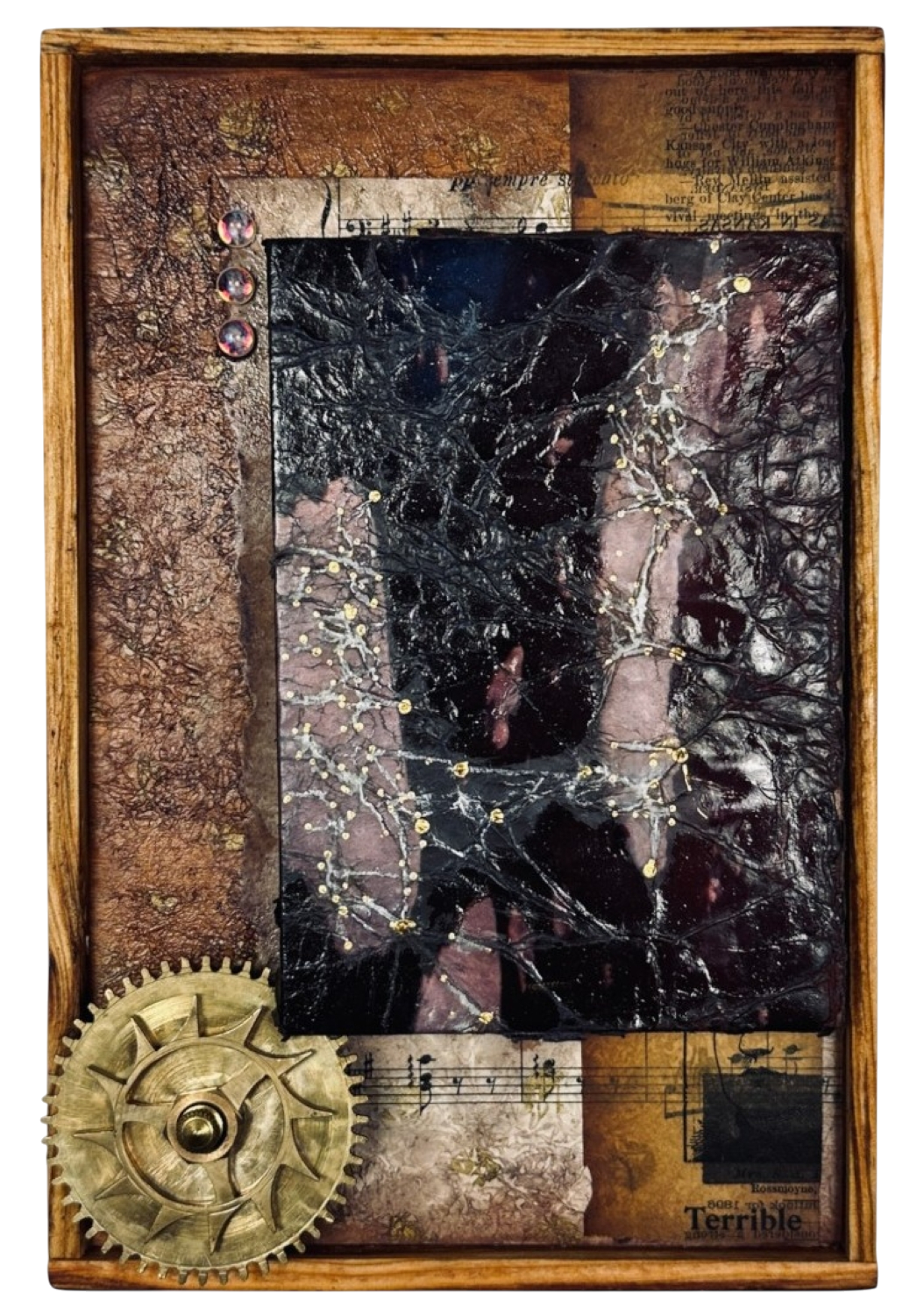
Kharris Brill, Measure of Dissonance, found object assemblage, 10 x 6 1/2 x 1 1/3 in., 2025.
Making and reflecting move together in a kind of rhythm. There are days when I work almost without thinking, and others when I pause to tilt a piece, study its weight, or shift an element until it feels right. If a work resists me, I don’t force it. I’ll let it sit, half-finished, until the moment comes when I know it isn’t working. That realization frees me. I’ll cut into it, sand it down, or take it apart entirely, knowing that starting over is not failure but the beginning of a new direction.
Experimentation is where the work deepens. One of my favorite discoveries came from something as ordinary as tissue paper—the kind used to wrap fragile gifts. I crumple it, press it into glue, and once it dries, sand it lightly. The result is a surface alive with peaks and valleys, catching light in ways that suggest stone, cracked plaster, or even the faint outline of maps. What is fragile in one context becomes enduring in another. This transformation is what excites me: a simple material shifting into something unexpected and powerful.
That sense of surprise is constant. A different texture, an accidental placement, or the substitution of one object for another can change the direction of a piece entirely. These unplanned turns remind me to stay open, not only in art but in life. Much like the studio, daily life rarely follows a straight line. Plans unravel, accidents occur, and what first feels like disruption often becomes the heart of the work—or the day.
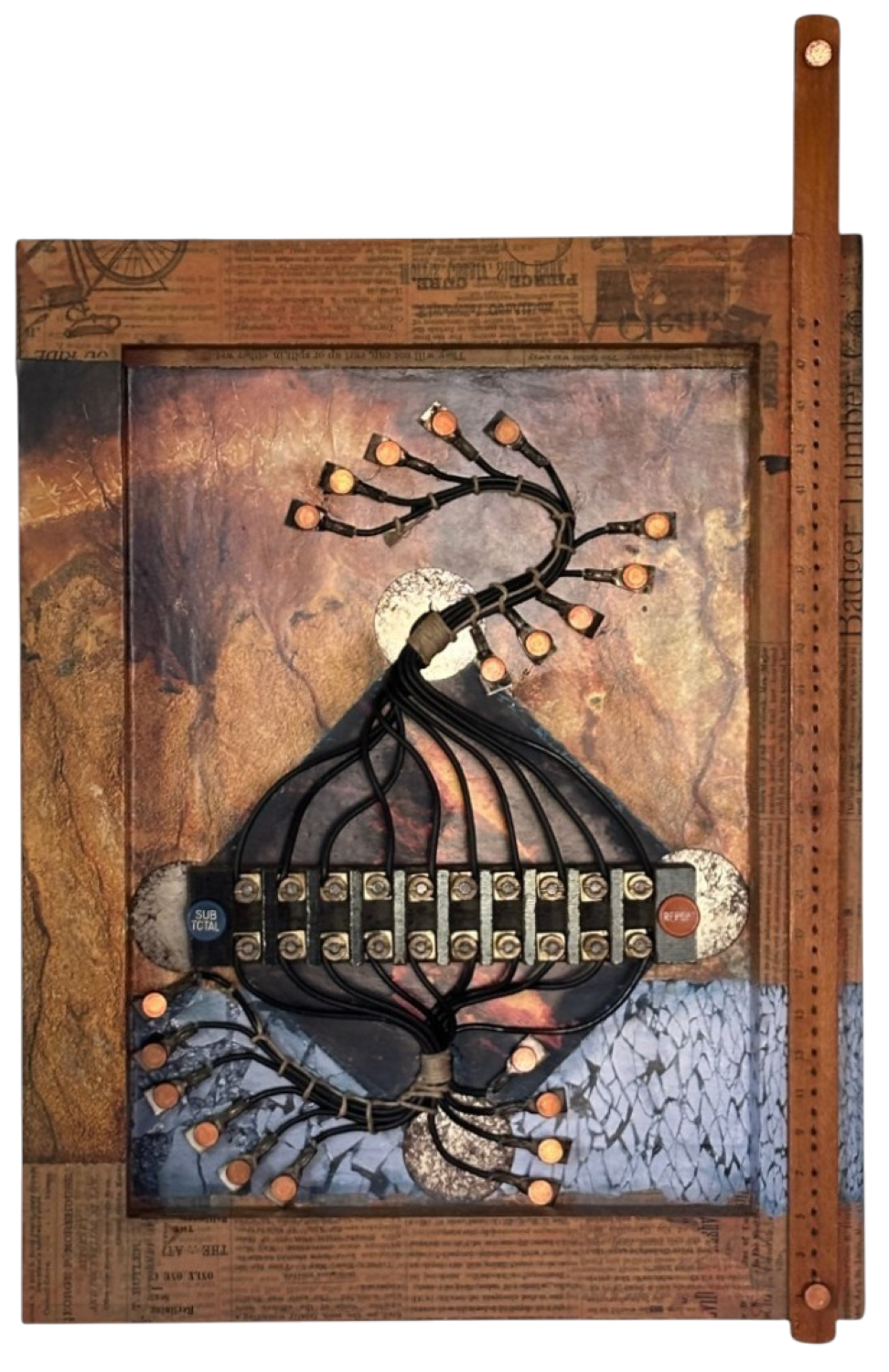
Kharris Brill, Silent Storm, found object assemblage, 17 x 11 x 1 in., 2025.
Through making, I often discover clarity, though it rarely arrives all at once. Instead, it builds slowly, like the layers of paper or materials I add and sand back. At first, the meaning may be hidden, but as the process continues, what needs to be seen begins to emerge. In those moments, I realize I am not only constructing an artwork, but also reshaping my own understanding.
This way of working has become a way of living. I try not to enter situations assuming I know the outcome. Like a piece in progress, each day is something unintroduced, to be met with curiosity and willingness to adjust. Exploration, dismantling, rebuilding—all are essential to both my studio practice and my life.
For me, making is inseparable from thinking. It is not the reflection that comes after but the reflection that happens in motion. Wrinkled tissue, the curve of a typewriter arm, the teeth of a discarded gear—these fragments lead me to new ways of seeing. In shaping materials, I shape ideas. And in staying open to change, I allow both the work and myself to become something I couldn’t have imagined at the start.
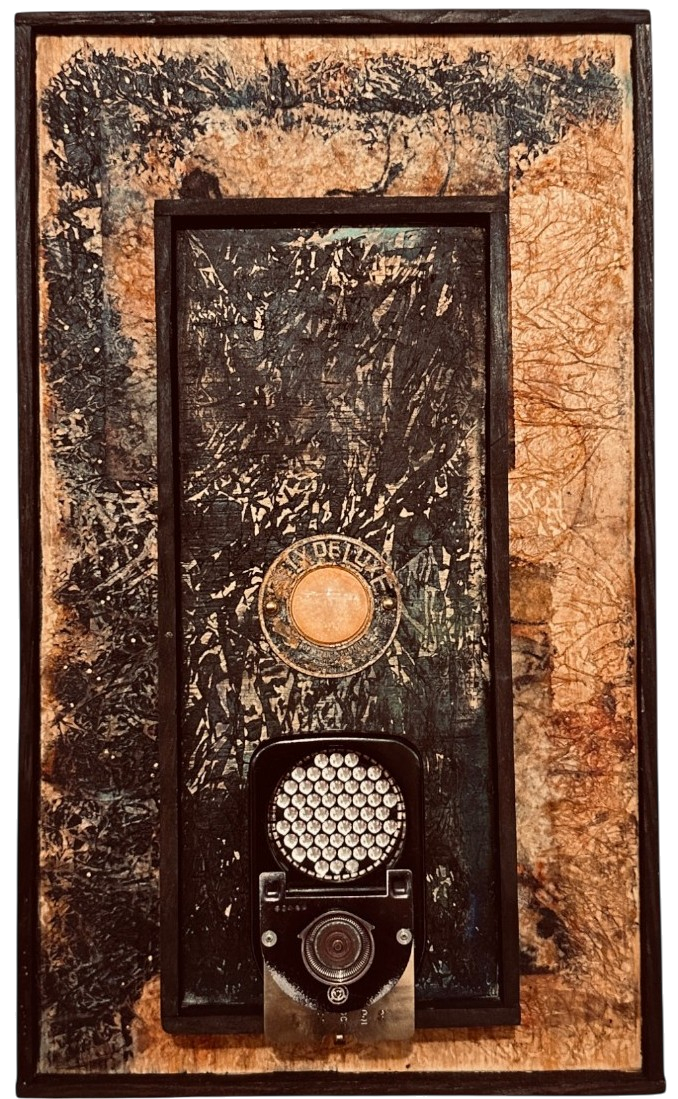
Kharris Brill, Echo Chamber, found object assemblage, 14 x 8 1/2 x 2 in., 2025.
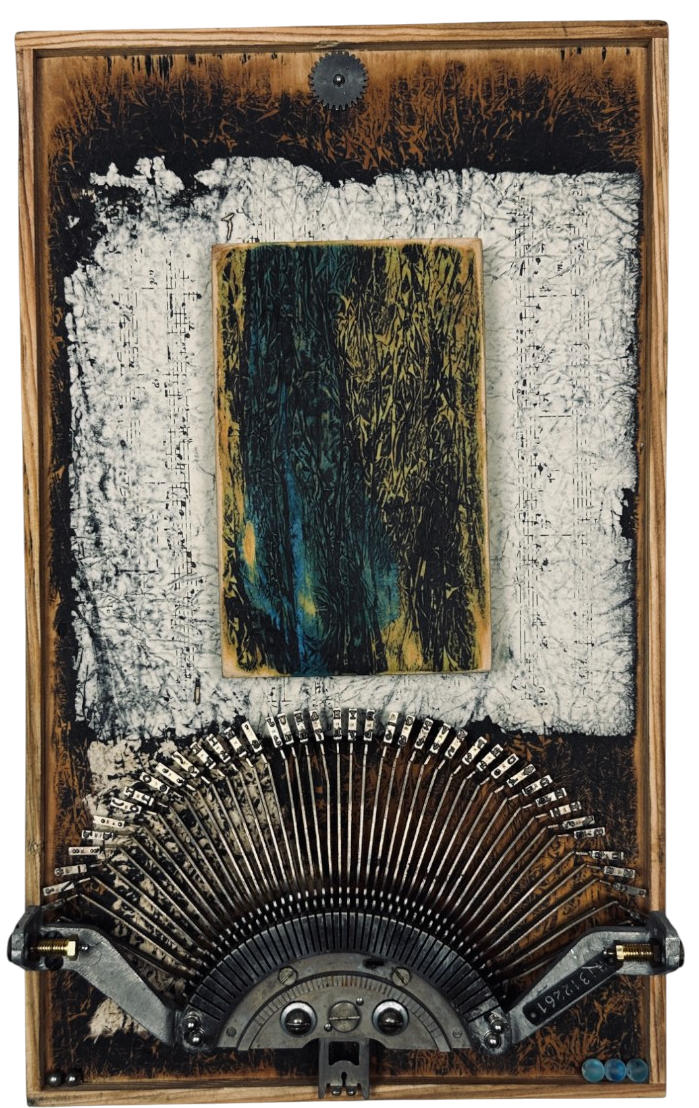
Kharris Brill, Retired Script, found object assemblage, 16 x 9.5 x 2 in., 2025.
This essay first appeared in the Maine Arts Journal: UMVA Quarterly and is reproduced here with permission. I’m grateful to the editors for supporting and sharing my work.
Learn More About Assemblage Art
Want to go deeper? These articles explore specific aspects of the practice:
If you’d like to see how I’ve put materials together, visit:
Available Works – current pieces for sale
Portfolio – sold works. Perhaps an idea for a commissioned piece?